Cross-Cultural Studies 5 Papers
Comparative analysis across Greek, Roman, and non-Western classical traditions.
Cross Cultural
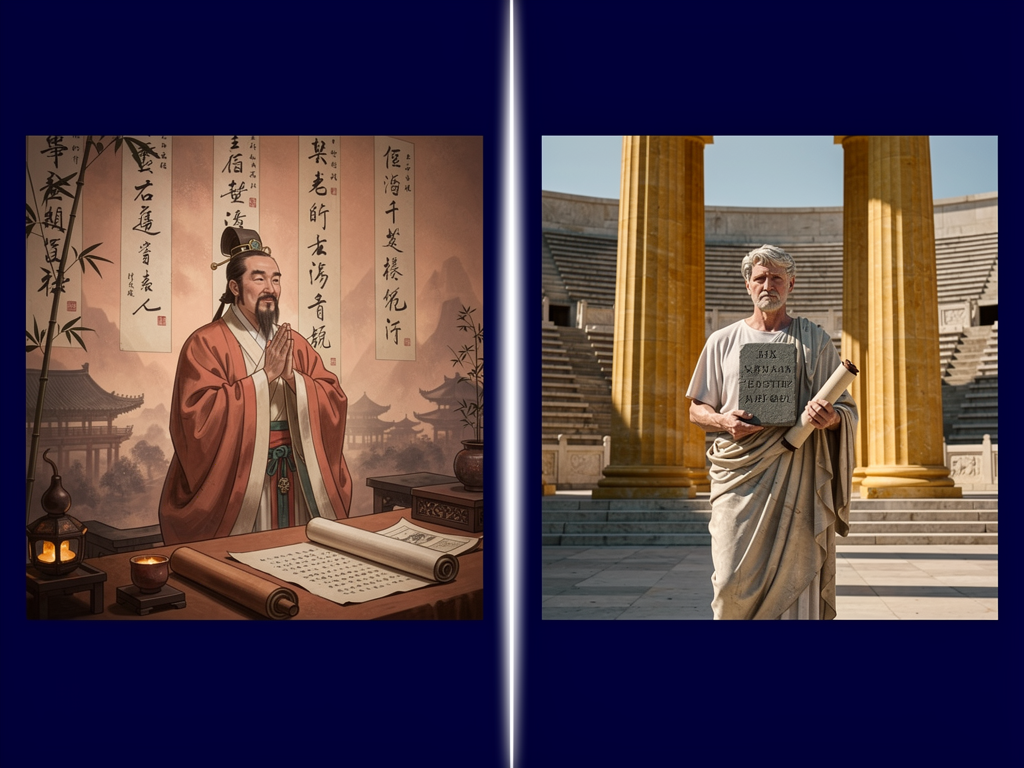
Governance by Virtue vs. Governance by Law: Confucius and Thucydides
Confucius and Thucydides were near-contemporaries addressing the same problem—political stability—yet reached opposite solutions. Testing Confucian virtue-governance against Athenian democracy reveals why both failed and what synthesis emerges.
Cross Cultural
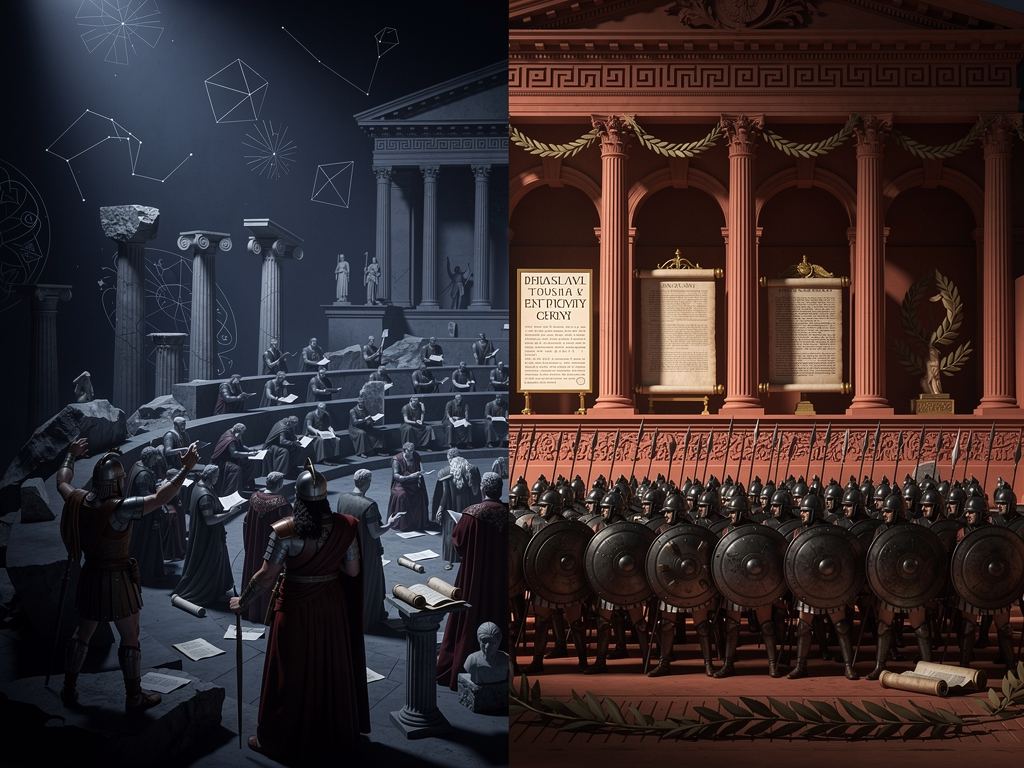
Greek and Roman: Two Civilizations, One Contradiction
Greece valued diversity and debate; Rome valued order and unity. Both produced greatness. Both failed for opposite reasons — Greece through excess freedom, Rome through excess order. Drawing from the entire ancient canon (Herodotus, Thucydides, Plutarch, Caesar, Tacitus, Homer, Plato), this essay synthesizes Greek and Roman approaches to politics, war, honor, philosophy, religion, and truth itself. The tension between these two impulses defines persistent civilizational debates: freedom vs security, innovation vs stability, pluralism vs unity.
Cross Cultural
Narrative Techniques in Herodotus and Sima Qian: Parallel Approaches to Universal History
How Herodotus and Sima Qian independently developed similar narrative techniques for writing universal history despite cultural and temporal separation.

Cross Cultural
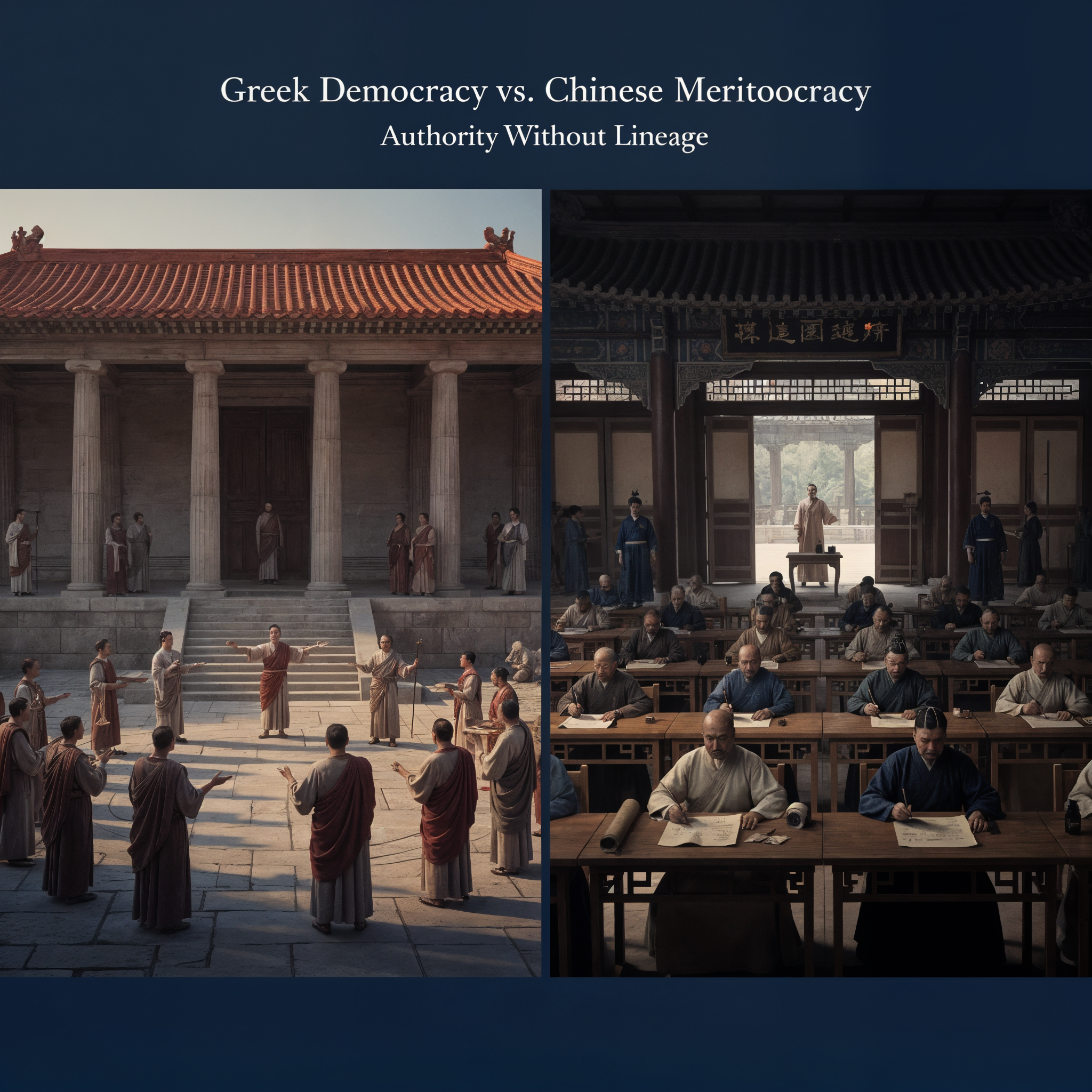
Greek Democracy vs. Chinese Meritocracy: Authority Without Lineage
How different civilizations solved the same fundamental problem: creating legitimate authority without hereditary claims.
Cross Cultural
Greek vs. Chinese Models of Authority: Democracy and Meritocracy Compared
How different civilizations solved the same fundamental problem: creating legitimate authority without hereditary claims.